Crowdsourcing
by Jeff Howe · 2008
In a nutshell
A business and technology book by Jeff Howe examining how the power of the crowd and online communities can be harnessed for innovation, problem-solving, and content creation—relevant for startup founders exploring marketplace, platform, and community-driven models.
Crowdsourcing
Category: Disruption & Innovation
Type: Nonfiction business & technology book
Author: Jeff Howe
Publisher / Imprint: Penguin Random House
Slug: crowdsourcing
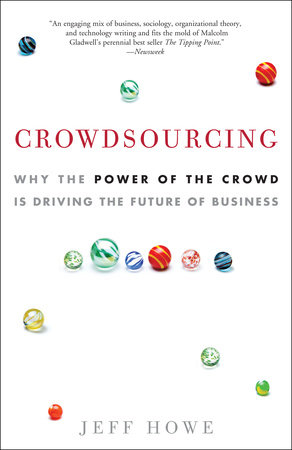
Overview
“Crowdsourcing” by Jeff Howe explores how the power of large online communities can be organized and leveraged for innovation, problem‑solving, and content creation. It is particularly relevant for startup founders and product builders interested in marketplace, platform, and community‑driven business models.
The book examines how the internet enables organizations to tap into distributed talent and collective intelligence, and how this reshapes traditional approaches to work, creativity, and R&D.
Features
- Focus on crowd-powered innovation
Explains how companies and creators use large groups of people—often volunteers or independent contributors—to generate ideas, designs, and solutions. - Online community dynamics
Looks at how digital communities form, self‑organize, and collaborate, and what motivates participants to contribute time, skills, and knowledge. - Business model implications
Discusses how crowdsourcing underpins marketplace, platform, and community‑driven models, including new ways to structure work, ownership, and value creation. - Applications across industries
Covers how crowdsourcing can be used for product development, problem‑solving contests, creative work (like design or media), and information gathering. - Impact on labor and expertise
Analyzes how crowdsourcing changes who does the work (professionals vs. the crowd), how expertise is evaluated, and how tasks can be decomposed and distributed. - Strategic considerations for founders
Provides conceptual tools for deciding when and how to involve a crowd, how to design incentives, and how to integrate community output into products or services. - Technology and infrastructure lens
Examines the role of internet platforms, digital tools, and network effects in enabling large‑scale collaboration and co‑creation. - Cultural and organizational shifts
Explores how embracing crowdsourcing requires changes in organizational culture, openness to external ideas, and new approaches to intellectual property and control. - Relevance to disruption and innovation
Situates crowdsourcing within broader trends in disruptive innovation, demonstrating how leveraging the crowd can challenge incumbents and enable lean experimentation.
Tags
- Innovation
- Community-building
- Platforms
Branding
- Brand / Publisher: Penguin Random House
- Brand logo:

No pricing or edition details (hardcover, paperback, ebook, audiobook) are specified in the provided content. For current pricing and formats, see the publisher’s product page:
Reference
Crowdsourcing — publisher / official page. Summary adapted from the Awesome Startup Books collection.
If you like this, read
Innovation and Entrepreneurship
Peter Drucker's classic on sources of innovation for corporate audience, useful for startups.
The Network State: How to Start a New Country
A visionary exploration of how digital communities can crowdfund territories around the world and build startup societies that eventually attain diplomatic recognition. Balaji Srinivasan presents a roadmap for creating new nations in the digital age.
A Technique for Producing Ideas
Classic book from the 1940s by ad executive James Webb Young on how to produce creativity under pressure. Offers exercises to stimulate ideas when stuck, ideal for startup ideation.
The Idea Factory: Bell Labs and the Great Age of American Innovation
Jon Gertner chronicles the remarkable story of Bell Labs, the research and development wing of AT&T that became the world's greatest innovation lab. This New York Times bestseller reveals how a small group of brilliant minds created the transistor, laser, digital communications, cellular telephony, and countless other innovations that shaped modern life.
The Innovator's Dilemma
The Innovator’s Dilemma is another classic business book that every founder should read. First published in 1997, the book focuses on why incumbent companies consistently struggle to adapt to disruptive technologies. Through a detailed study of multiple industries across several decades, Christensen unpacks the structural factors that prevent incumbents from reacting to disruption. For any founder who’s ever been asked 'What if Google builds this?' (or who wants to better understand how their ‘David’ can conquer ‘Goliath’), this book is a must-read.
Zero to One: Notes on Startups, or How to Build the Future
Peter Thiel and Blake Masters share contrarian insights on building innovative startups, emphasizing creating new value rather than copying existing models, and developing monopolies through breakthrough technology.